
Speakers - 2026

Title: Reducing drug cravings in polydrug users undergoing self-regulation therapy mimicking the effects of drugs
Abstract
What will the audience take away from your presentation?
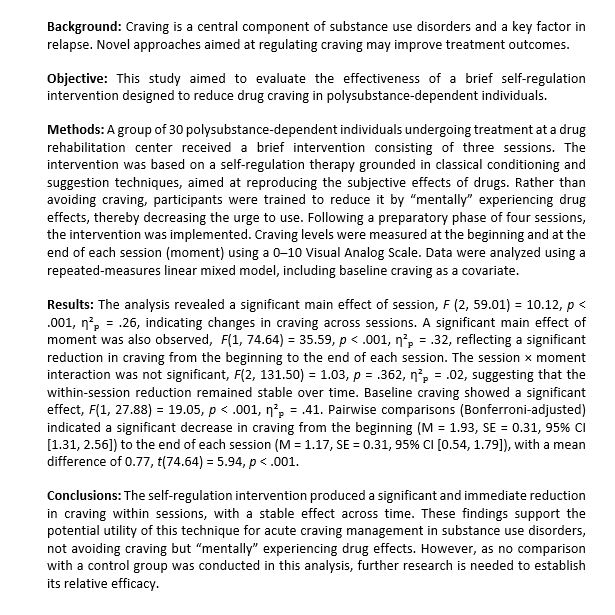
This presentation offers a novel, clinically actionable approach to one of the most challenging aspects of addiction treatment: the management of craving in real time. Attendees will learn a brief, structured self-regulation technique that can be immediately integrated into clinical practice to produce rapid and measurable reductions in craving within a single session.
Unlike traditional approaches that focus on avoiding or suppressing craving, this method introduces a paradigm shift by teaching patients to actively regulate craving through the guided mental reproduction of drug effects. This counterintuitive yet evidence-based strategy provides clinicians with a powerful new tool to enhance patient self-control and reduce relapse risk.
For practitioners, this approach is highly practical: it is time-efficient, low-cost, and easily adaptable to a wide range of treatment settings, including outpatient clinics, residential programs, and relapse prevention interventions. It has the potential to increase treatment engagement, improve short-term outcomes, and complement existing therapeutic models without requiring major structural changes.
For researchers and educators, the study opens new avenues for innovation by integrating principles of classical conditioning, suggestion, and self-regulation into addiction treatment. It provides a replicable framework that can inform future research, interdisciplinary collaboration, and the development of training programs in clinical psychology and addiction studies.
Ultimately, this work delivers both immediate clinical utility and long-term scientific value. It offers a practical solution to a persistent clinical problem, introduces a transformative conceptual approach to craving regulation, and equips professionals with tools that can enhance effectiveness, efficiency, and innovation in their daily practice.
Organizer

- 8 The Green, Suite R, Dover DE, 19901, United States
- +1 214 731 7766
- info@irisscientificgroup.com
Copyright © 2021 IRIS Scientific Group | All Rights Reserved Terms and Conditions | Privacy Policy